
"Chanchamgo Valley"
181 article(s) found

Ecuador coffee varieties of carapica coffee beans introduction
As coffee is consumed around the world, the world coffee industry moves toward mass production, and San Cristobal's smaller and less reliable coffee industry is in trouble and may eventually be forced to give up without profit. It wasn't until the early 1990s that the Gonzalez family bought Hassenda Coffee Plantation. Humboldt Current

Introduction to the coffee flavor and taste manor of the gentle aroma Hassanda Coffee Garden in Ecuador
The names of the provinces are as follows: Pichincha, Asuai, Boliwar, Caniar, Karch, Codoto Paxi, Chimborazo, El Oro, Esmeraldas, Guayas, Inbabula, Loha, Los Rios, Manawi, Zamora-admiration, Nabo, Morona-Santiago, Pastasa, Tungurahua, Galapagos, Sugumbios and Vero

Introduction to the flavor and taste characteristics of Ecuadorian coffee manor with a very balanced and refreshing taste
The minerals are mainly oil, mainly distributed in Guayaquil Bay, and oil fields are also found in the Amazon Plain. Gold and silver are distributed in Machaki and Saluma and other places. Copper is made in Machaki. There are sulfur mines in the Cologne Islands. In addition, there is iron, lead and so on. The forest area accounts for about 68% of the country's area, mostly in the eastern region, rich in valuable wood, such as mahogany and ointment.

Medium bodied Hazenda Coffee Estate Fine Coffee Bean Flavor Taste Aroma Characteristics Description
Ecuador is one of the few countries in South America that produces both Arabica coffee and Robaik coffee. But as the land available for arabica coffee trees dwindles, robert coffee production is increasing. The best Arabica coffee is grown in the Andes, especially in the Chanchamgo Valley, where the Andes divide into two mountain ranges from the south.

Introduction to the flavor and taste characteristics of coffee from Santa Cruz Manor, Ecuador, which tastes very balanced and refreshing.
After entering Ecuador from Colombia, the Andes is divided into the eastern and western Cordillera mountains, with a high plateau in the north and a low plateau in the south, with an average elevation of between 2500 meters and 3000 meters. The Andes run through the middle of the border. The ridges crisscross, dividing the plateau into more than ten intermountain basins. The most important are the Quito basin and the Cuenca basin in the south. There are many volcanoes and frequent earthquakes in the territory.

Ecuadorian coffee
Coffee origin: the Ecuadorian Arabian Coffee Tree was first introduced to Ecuador (Ecuador) in 1952 and its coffee quality is very good, especially the coffee harvested in early June. Ecuadorian coffee beans can be divided into two varieties: Galapagos and Gigante, both of which have the characteristics of large granules and heavy weight. Ecuadorian coffee can be divided into first class (No.1) and special coffee according to quality.

The taste of coffee in Santa Cruz Manor, Ecuador is very balanced and refreshing.
Port Guayaquil is the largest seaport in Ecuador. It faces the Pacific Ocean and backs against Mount Santa Ana. The nearby island of Pune serves as a natural barrier to protect the harbour from storms. There is a wharf in the south, which is more than 900 meters long. Ships from different parts of the world flying various flags are moored in the harbor. The port railway leads to the capital Quito, and highways connect Quito with other cities in the country.

Fragrant Hassanda Coffee Manor in Ecuador, the planting market price of boutique coffee beans is simple.
Flavor: balanced acidity, aromatic fragrance recommended roasting methods: medium to deep roasting, can be made into high-quality mixed coffee, suitable for multi-purpose evaluation: generally the best Ecuadorian coffee is grown on the island of San Cristobal in the Galapagos Islands, here has the unique natural geographical conditions for giving birth to the best quality coffee in the world. A cup of Galapagos coffee, Jude

The highest elevation Ecuador coffee cultivation geographical location climate altitude profile
The best Arabica coffee is produced in the Andes, especially the Chanchamgo Valley. The Andes is divided into two mountain ranges, extending from south to north to central Ecuador. Ecuador is located in South America and the equator line passes through the country. Therefore, Ecuador is also known as the equatorial country. Ecuador's superior geographical location, fertile soil and special climatic conditions are

Boutique Coffee introduction to 53 Coffee producing areas in the World 3
thirteen. The coffee grown in the highlands of Panama is absolutely high quality, but the plantation coffee is not yet on the market. Panama coffee is smooth, light and sour, and its high-quality coffee beans are pure and distinctive. The first batch of coffee exported each year is shipped in November, and almost all high-quality coffee beans are shipped to France and Finland. The best coffee is grown in the north of the country, that is,

World Map of Coffee beans-take you to know 53 coffee producing areas around the world
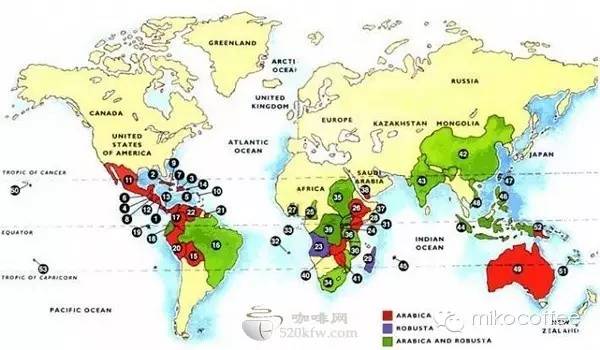
There are shadows of coffee beans in many parts of the world, and they can grow normally as long as the climate is right. These places suitable for the cultivation of coffee beans, usually located between the Tropic of Cancer and the Tropic of Cancer, are called coffee growth zones. R: Robusta coffee beans M: mixed coffee beans A: Arabica coffee beans one. Costa Rican coffee has full grains, ideal acidity and aroma.

Data of 25 coffee producing countries in the world (part two)
The word coffee comes from the Greek word Kaweh, which means strength and enthusiasm. Coffee tree is a small evergreen tree of Rubiaceae. Coffee for daily consumption is made from coffee beans combined with various cooking utensils, and coffee beans refer to the nuts in the fruit of coffee trees, which are then roasted by appropriate roasting methods. All over the world, people like drinking coffee more and more. The coffee text that followed
World Map of Coffee beans-introduction of 53 Coffee producing areas in the World
one. Costa Rican coffee has full grains, ideal acidity and unique strong aroma. Tarrazu of Costa Rica is one of the major coffee producing areas in the world. Costa Rica, with its fertile volcanic soil and good drainage, is the first country in Central America to grow coffee and bananas for commercial value. Coffee and
World Map of Coffee beans-take you to know 53 coffee producing areas around the world
There are shadows of coffee beans in many parts of the world, and they can grow normally as long as the climate is right. These places suitable for the cultivation of coffee beans, usually located between the Tropic of Cancer and the Tropic of Cancer, are called coffee growth zones. R: Robusta coffee beans M: mixed coffee beans A: Arabica coffee beans one. Costa Rican coffee has full grains, ideal acidity and aroma.
World boutique Coffee beans: the first introduction to Coffee from 53 Coffee producing areas in the World (to be continued)
one. Costa Rican coffee has full grains, ideal acidity and unique strong aroma. Tarrazu of Costa Rica is one of the major coffee producing areas in the world. Costa Rica, with its fertile volcanic soil and good drainage, is the first country in Central America to grow coffee and bananas for commercial value. Coffee and fragrance

Arabica coffee beans, what is the knowledge of coffee cold all over the world?
Professional coffee knowledge exchange for more information about coffee beans, please follow the coffee workshop (Wechat official account cafe_style) one. Costa Rican coffee has full grains, ideal acidity and unique strong aroma. Tarrazu of Costa Rica is one of the major coffee producing areas in the world. The volcanic soil in Costa Rica is very fat.

Which coffee beans are Arabica beans? what kinds of Arabica coffee are there and which ones taste better?
Professional coffee knowledge exchange more information about coffee beans please follow the coffee workshop (Wechat official account cafe_style) Arabica coffee category one. Costa Rican coffee has full grains, ideal acidity and unique strong aroma. Tarrazu of Costa Rica is one of the major coffee producing areas in the world. Costa Rica
Introduction of Coffee from 53 Coffee producing areas in the World
one. Costa Rican coffee has full grains, ideal acidity and unique strong aroma. Tarrazu of Costa Rica is one of the major coffee producing areas in the world. Costa Rica, with its fertile volcanic soil and good drainage, is the first country in Central America to grow coffee and bananas for commercial value. Coffee and fragrance
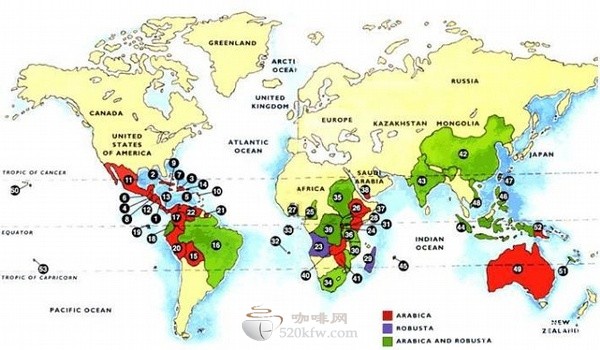
Coffee beans from 53 producing areas-enough to make you memorable
one. Costa Rican coffee has full grains, ideal acidity and unique strong aroma. Tarrazu of Costa Rica is one of the major coffee producing areas in the world. Costa Rica, with its fertile volcanic soil and good drainage, is the first country in Central America to grow coffee and bananas for commercial value. Coffee and fragrance

Do you understand so many varieties and places of origin?
In the world of bulk trade, in addition to our common varieties such as soybeans, steel, crude oil and non-ferrous metals, there are also many varieties that are not often heard of, but the trade volume is also very large, such as cocoa, coffee and so on. The word coffee comes from the Greek word Kaweh, which means strength and enthusiasm. Coffee tree is a small evergreen tree of Rubiaceae. Coffee beans are used for daily drinking.